
What if your favourite healthy habit isn’t actually destroying your smile? You love the crisp fizz of a cold glass of bubbly water, but conflicting health reports might have you worried about your enamel. You want to stay hydrated without the sugar of soda, yet you fear that constant carbonation leads to expensive dental bills. It’s a frustrating trade-off that leaves many people feeling guilty about a simple daily pleasure.
The good news is that the science is on your side. If you’ve been wondering is sparkling water bad for your teeth, the answer is more nuanced than a simple yes or no. The American Dental Association confirms that plain sparkling water is generally safe for your enamel; the real danger lies in what’s added to the bubbles. This article reveals the scientific reality of how carbonation affects your oral health. You will discover the truth about pH levels, realize why citrus flavourings are the real culprits, and learn practical tips to protect your teeth. We provide the clarity you need to enjoy your sparkling water dispenser with total confidence and zero compromise.
Key Takeaways
- Plain carbonated water is only mildly acidic and poses a minimal risk to enamel compared to sugary alternatives.
- Stop worrying about whether is sparkling water bad for your teeth and focus on avoiding the hidden sugars and citrus acids that drive erosion.
- Protect your dental health by enjoying bubbly drinks during meal times and using a flat water chaser to neutralize acidity.
- Upgrade to a premium sparkling water dispenser to ensure high-purity carbonation without the need for harmful additives or plastic waste.
- Learn how direct-line filtration systems provide a cleaner, safer way to enjoy your favourite bubbles at home or in the office.
The Science of Fizz: Understanding pH and Carbonic Acid
Stop worrying about the fizz. Start focusing on the facts. To understand if your favourite bubbles are safe, you need to grasp The Science of Fizz. Carbonic acid is the primary byproduct of carbonation. It forms when carbon dioxide dissolves into water under pressure. This chemical reaction creates the refreshing bite you enjoy, but it also shifts the liquid’s chemical profile.
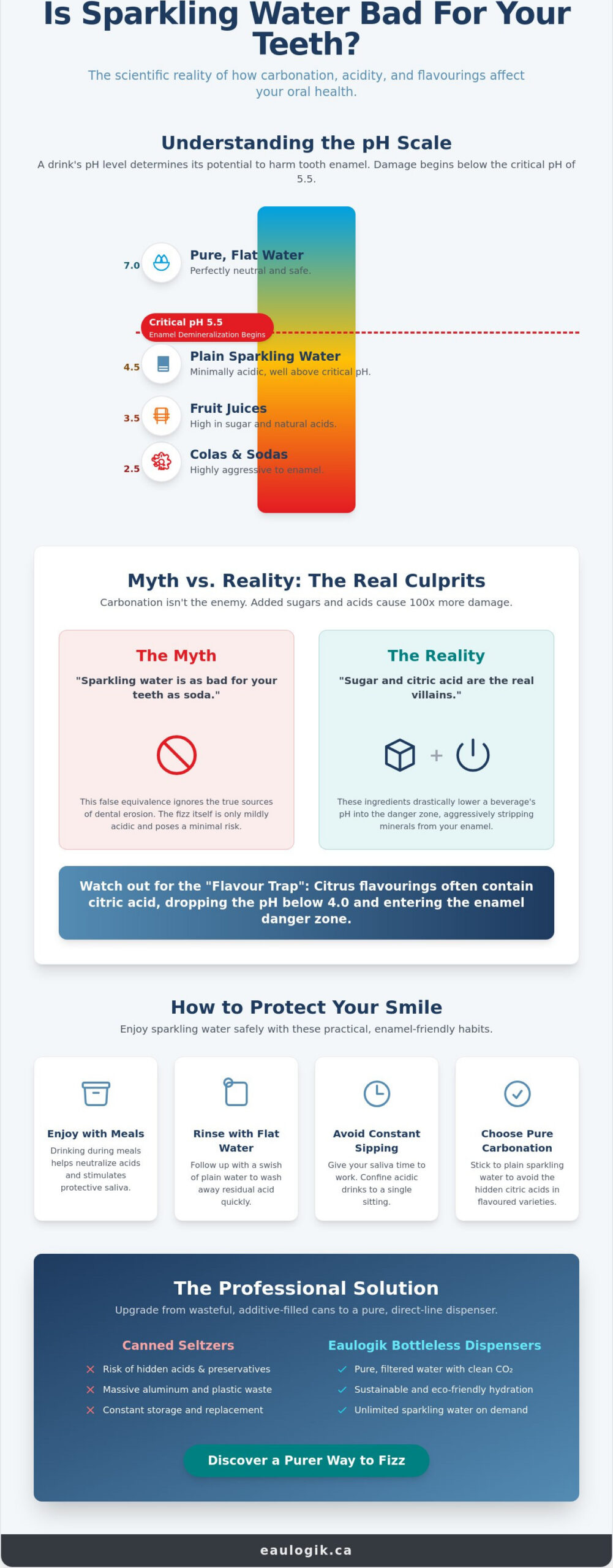
Pure, flat water sits at a neutral 7.0 on the pH scale. In contrast, plain sparkling water typically measures around 4.5. Because the pH scale is logarithmic, this jump seems significant. It’s the reason why many health-conscious Canadians ask: is sparkling water bad for your teeth? While it is more acidic than tap water, it remains far less aggressive than soda or citrus juices.
The real danger begins at the “Critical pH” of 5.5. This is the threshold where tooth enamel starts to lose mineral content. When your mouth’s environment stays below this number, the hydroxyapatite crystals in your teeth can begin to dissolve. This process is called demineralization. Fortunately, your body has a built-in defence system that works around the clock.
Your saliva acts as a natural buffer. It works to neutralize acids, rinse away debris, and redeposit essential minerals. It’s a constant cycle of protection. As long as you don’t overwhelm your mouth with sugar or constant acid, your saliva can usually handle the occasional sparkling water without any long-term damage.
Acidity vs. Erosive Potential
A low pH level doesn’t tell the whole story. The erosive potential of a drink depends on more than just its acidity. It also involves the concentration of calcium and phosphate in your saliva. For example, researchers at McGill University analyzed various local Quebec water brands to determine their impact. They found that many sparkling waters have enough mineral content to buffer the acid effectively. This explains why the answer to “is sparkling water bad for your teeth” is rarely a simple yes. High-quality bubbles without added sugars or citric acids are remarkably gentle on your enamel.
Myth vs. Reality: Is Sparkling Water as Bad as Soda?
Stop comparing seltzer to soda. It’s a false equivalence that creates unnecessary fear. When people ask is sparkling water bad for your teeth, they’re often confusing the fizz with the sugar. The real villains are sugar and citric acid. These ingredients cause 100 times more damage to your enamel than plain carbonation ever could. It’s time to look at the Myth vs. Reality of what’s actually in your glass.
The erosion rates tell a clear story. Colas typically have a pH around 2.5, which is highly aggressive. Fruit juices follow closely behind at 3.5. Plain sparkling water sits safely at 4.5. You aren’t just drinking bubbles; you’re choosing a significantly safer alternative to sugary beverages. Don’t believe the myths about calcium leaching, either. Scientific evidence confirms that carbonated water does not pull minerals from your bones or your teeth. It’s a harmless physical sensation, not a chemical threat.
Watch out for the “flavour trap.” Many brands use lemon, lime, or grapefruit additives to enhance the taste. These citrus flavourings often contain citric acid, which can drop the pH of the beverage below 4.0. This acidity level enters the danger zone for enamel demineralization. If you’re still wondering is sparkling water bad for your teeth, the answer is only “yes” when you add these acidic extras. Stick to pure, high-quality carbonation to keep your smile intact.
The Problem with Canned Seltzers
Commercial cans are a logistical burden. They require storage, create massive amounts of recycling waste, and often contain hidden preservatives to maintain shelf life. Relying on store-bought bubbly water is an outdated manual task that complicates your life and risks your dental health through unknown additives. You can reach out to our team to simplify your hydration setup and remove these burdens. For those looking for the ultimate upgrade, explore The Best Sparkling Water Solutions for Montreal Offices and Homes in 2026. High-end systems provide crisp, pure carbonation without the hidden acids found in aluminium cans.
Practical Protection: How to Drink Sparkling Water Safely
Stop the constant sipping. If you want to protect your enamel, timing is everything. Drinking carbonated water with a meal is significantly safer than nursing a glass throughout the entire afternoon. Food triggers saliva production. This helps neutralize the carbonic acid and rinses your teeth naturally. When you ask is sparkling water bad for your teeth, remember that frequency matters more than the drink itself. Constant exposure prevents your saliva from doing its job. Timing is everything. Frequency is key. Protection is possible.
The “water chaser” technique is your best defence. It’s simple. It’s effective. It’s free. After finishing your bubbly water, rinse your mouth with a few sips of flat, fluoridated tap water. This restores your mouth’s natural pH balance almost instantly and washes away lingering acids. While ice-cold water feels more refreshing, it actually holds more carbon dioxide. This increased carbonation can slightly lower the pH level, requiring more buffering from your saliva. The verdict on straws? They only help if you position the tip toward the back of your mouth. If you’re just sipping normally, the straw actually concentrates the acidic liquid against your front teeth, which can do more harm than good.
A Montrealer’s Guide to Healthy Hydration
Montreal residents have a distinct advantage. We have access to some of the highest-quality municipal water in the country. By utilizing local tap water as your carbonation base, you realize the protective benefits of fluoride while enjoying your bubbles. Maintaining regular dental check-ups in Quebec ensures any minor mineral loss is caught early. By using a professional filtration system, you no longer have to wonder is sparkling water bad for your teeth because you control the purity of your hydration. You can contact our local experts to find the best setup for your home or office. High-end bottleless systems integrate directly with your plumbing, removing the logistical weight of plastic bottles while keeping your dental health a priority. No more heavy cases. No more recycling piles. No more dental guilt.
The Professional Solution: Why Bottleless Dispensers Are Better for Teeth
Stop settling for store-bought cans. If you’re still concerned about whether is sparkling water bad for your teeth, look at your source. Most commercial seltzers rely on hidden citric acid for shelf stability. Our bottleless systems use advanced direct-line filtration to remove lead, chlorine, and sediment before the carbonation process even begins. This ensures you start with the cleanest water possible. It’s about purity. It’s about precision. It’s about protection.
You control the fizz. Unlike SodaStream machines that require manual effort and frequent plastic bottle replacements, Eaulogik dispensers offer customizable carbonation at the touch of a button. You can achieve a sharp, crisp “bite” without adding artificial acids that lower pH levels into the danger zone. This makes our systems a premium, tooth-friendly alternative to traditional carbonation methods. If you manage a busy workplace and are evaluating a sodastream alternative for office use, a plumbed-in dispenser eliminates the cylinder swaps and hidden acids that compromise both productivity and dental health. You get the bubbles you love without the chemical baggage. No hidden preservatives. No artificial flavours. No dental compromise.
Sustainability meets health in a single system. By switching to a bottleless dispenser, you eliminate the need for aluminium cans and the logistical weight of plastic waste. You also remove the environmental and health risks associated with mass-produced beverages. It’s a modern upgrade that respects both your environment and your enamel. When you realize that the answer to is sparkling water bad for your teeth depends entirely on the purity of your equipment, the choice becomes clear. For Montreal homeowners ready to make the switch, our home sparkling water dispenser Montreal professional guide walks you through every step of choosing and installing the right integrated system for your kitchen.
Upgrade Your Home or Office Hydration
Experience the convenience of chilled, sparkling water on demand without the heavy lifting. Forget the physical burden of replacing 5-gallon jugs or hauling cases of cans from the store. Our systems integrate directly into your existing plumbing to provide limitless, high-quality hydration. Explore our range of Residential Water Dispensers in Montreal to find the perfect fit for your kitchen. For a deeper dive into the latest technology, consult The Best Water Machine in Montreal: Your 2026 Guide. Modernize your lifestyle and protect your smile with a system built for the future.
Secure Your Smile with Superior Hydration
You don’t have to choose between the fizz you love and the dental health you need. The evidence is clear. Plain carbonation is a safe, refreshing alternative to sugary sodas. By focusing on timing and avoiding acidic additives, you can maintain your enamel while staying hydrated. While you might have initially wondered is sparkling water bad for your teeth, the real answer lies in the quality of your water source. High-purity bubbles are the key to guilt-free hydration.
It’s time to remove the logistical burden of plastic bottles and the hidden acids found in canned seltzers. Our systems offer professional-grade filtration that ensures every glass is as pure as it is crisp. We’ve provided dedicated Montreal-based support since 2014, helping local homes and businesses transition to eco-friendly bottleless technology. This modern upgrade simplifies your life and protects your physical well-being without the clutter of traditional delivery services. Upgrade to a professional sparkling water system for your Montreal home or office. You deserve a premium hydration experience that feels as good as it looks. Keep your bubbles and your bright smile too.
Frequently Asked Questions
Is it okay to drink sparkling water every day?
Yes, it’s perfectly fine to drink plain sparkling water daily as part of a healthy hydration routine. Since it contains no sugar and no calories, it remains a superior alternative to sodas or juices. Just ensure you aren’t replacing all your flat, fluoridated water, which provides essential minerals for tooth remineralization throughout the day. Daily consumption is safe for most healthy individuals who maintain good oral hygiene.
Does sparkling water cause cavities?
No, sparkling water does not cause cavities because it lacks the fermentable sugars that oral bacteria need to produce decay-causing acid. Cavities are the result of bacterial activity, not just the presence of bubbles. As long as your beverage is free from sweeteners and syrups, you aren’t increasing your risk of developing tooth decay or traditional dental caries.
Is flavoured sparkling water worse for your teeth than plain?
Flavoured varieties are often more damaging because they frequently contain citric acid or other organic acids to enhance taste. These additives can lower the beverage’s pH significantly more than carbonation alone. If you’re using a home dispenser, stick to natural infusions like cucumber or mint to avoid the hidden erosive potential found in many commercial canned brands that rely on acidic flavouring agents.
Can I drink sparkling water after brushing my teeth at night?
You should avoid drinking sparkling water after your nighttime brushing routine. Brushing can temporarily leave enamel more sensitive, and the slight acidity of carbonation isn’t ideal right before sleep when saliva flow naturally decreases. Stick to plain, flat water before bed to ensure your teeth remain in a neutral environment while you rest and recover.
Does sparkling water erode tooth enamel over time?
Plain sparkling water has a negligible effect on enamel erosion for most people. The primary concern regarding whether is sparkling water bad for your teeth involves the cumulative impact of “sipping” habits and acidic additives rather than the bubbles themselves. By choosing high-purity carbonation from a professional dispenser and following smart consumption habits, you can enjoy the fizz for years without compromising your long-term dental health.